
Health shocks can also cause economic shocks (ceteris-paribus). The coronavirus pandemic is one of the health shocks that might unravel another global economic shock. Why is that the case? Fact number one, health is a basic human need. Consequently, the satisfaction the health needs requires human decision-making in all economies. Decision-makers face the challenge of managing the synergies between health and economics amid a health shock. How is the Scenario? Simultaneously, economic shocks unveil themselves amid health shocks as the pattern of decision-making changes with time. The time-lagged impact of change in decision-making is revealed through market reactions and is observable. Markets not only react to consumer choice and entrepreneurial decisions but also react to government decisions.
Macroeconomic objectives of Economic Policy
All macroeconomic objectives could be affected by health and economic shocks. The potential reactions of markets are; the increase in market price volatility, the demand and supply shocks, among others. Economists of different schools of thought may differ in their economic forecasts, but the assumptions of any approach should be tested and empirically evident. The objective of the scientific approach should be to explain the global economic impact of the coronavirus. In the coming days, we will have the chance to observe; how strong or weak the global impact of the health and economic shocks will be in different economies around the world.
What is Health Economics?
Health Economics is the scientific branch of economics that deals with healthcare provision (supply) and healthcare utilization (demand) and how society makes coordination choices to meet the healthcare needs of its population. Economics as behavioral science influences health economics as a subbranch through the contribution of economic thought to healthcare issues. For example, we may see the solution to the following question: what are the most important behavioral choices of society that would help find the first-best allocation of healthcare goods and services in a world of scarce resources. The Coronavirus-Pandemic is the current health issue that is stress-testing our healthcare systems on a global scale. How we will deal with the pandemic depends on the behavioral incentives and contingencies to be resolved. In summary, health economics is the branch of economics that deals with the decision-making of how to allocate resources to health provision in economies. European countries have compulsory social welfare systems that coordinate health risks, while some economies have a voluntary system of insurance or no backup system in place.
How did the world economies react to the coronavirus pandemic outbreak?
It all started with the coronavirus pandemic outbreak somedays before 31.12.2019 in the Wuhan province in China. The first cases of the COVID-19 were reported to the World Health Organization by the Chinese government officials. Days after the World Health Organization reported the decease outbreak to the public on 05.01.2020. Globally, the reactions remained moderate and optimistic towards the ability to resolve the emerging disease. As reality became more prevalent and the cases wouldn’t be contained in China but spread around the world, the world Governments reactions as decision-makers were divergent and showed less global coordination. China put a whole province under quarantine, while most countries continued with life, as usual, giving out mild health alerts to the public.
Belated reaction of Governments
Maybe, the governments wanted to buy time to set up contingency plans, consult with experts on how to manage the unavoidable risks. The belated plan of actions by governments might have accelerated the spread of the coronavirus.
Economic slowdown, hoard purchases and travel bans
Simultaneously, the staggering impact of economic activities due to production stops in China channeled a global slowdown on the delivery of goods, services and the global supply (value) chain. The imposed travel bans and quarantines could heavily hurt the mobility of the people, the global flow of migration and tourism around some hotspots. Public life (e.g. traveling, local transport, retailing, etc.) in affected regions had been slowed down due to quarantines imposed by Governments, leading to hoarding behavior, the closing of industries and production, travel bans and other limitations to public life.
Global oil crash or Corona-Crash in Financial Markets
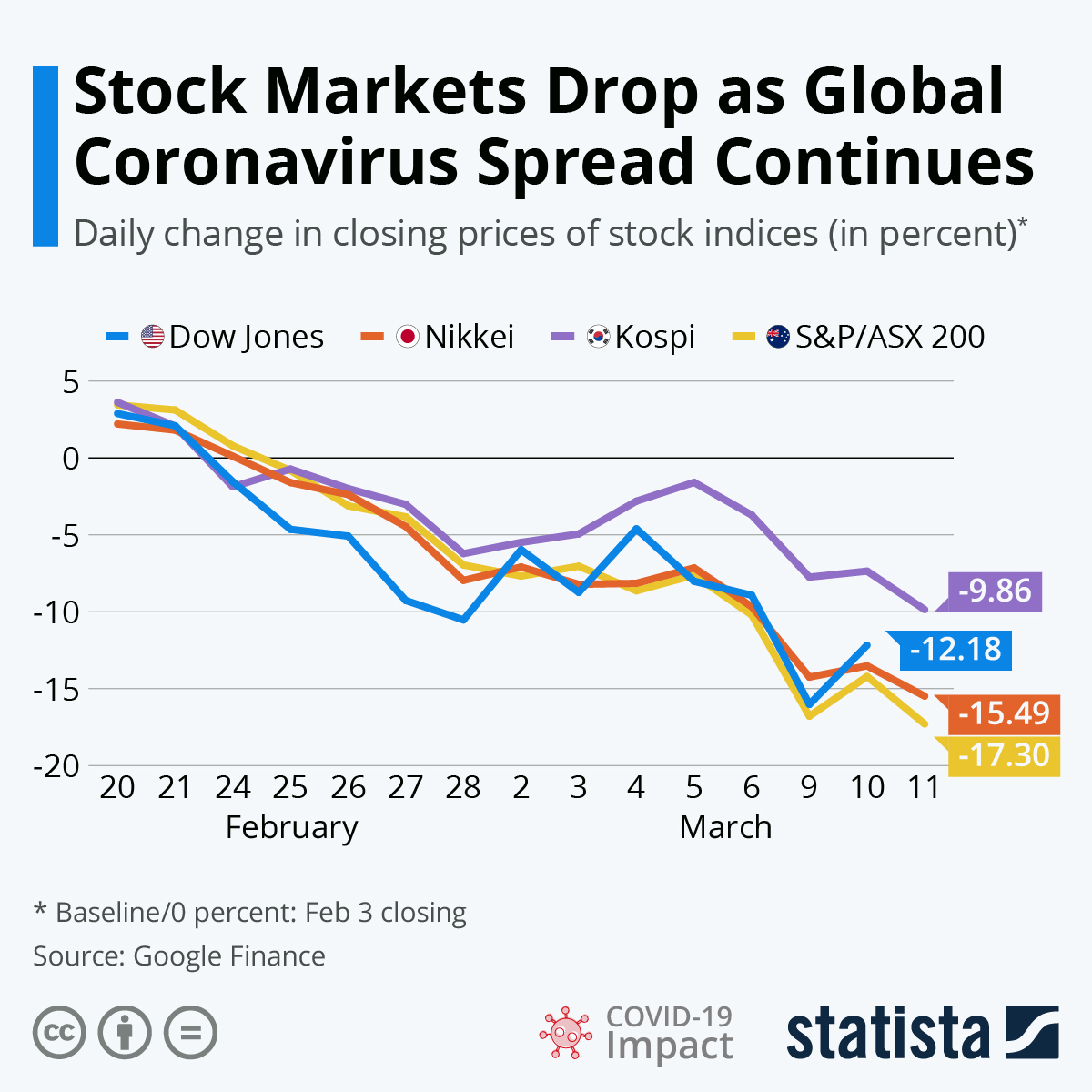
As expected, the impact was still to become visible in public life. The economic pressure has slowly become visible through reactions in financial markets. Financial markets are volatile markets, which adjust their valuation of assets in very short periods.
The oil-price-crash on 09.03.2020 agitated the global financial markets three months down the path. The reason for the price downfall was caused by the OPEC negotiations, which ended without a compromise. The over-production of oil, coupled with low demand for oil, led to the downfall of the oil price in the stock exchanges around the world.
- Concept of Opportunity CostsScarcity is the fundamental condition shaping economic life, compelling individuals, firms, and societies to make choices among competing alternatives, the concept of opportunity costs. At the center of this decision-making process lies the concept of opportunity cost, defined as the value of the best forgone alternative. This article provides an in-depth examination of opportunity costs, moving beyond simple monetary calculations to encompass non-monetary dimensions, including time, attention, risk, and social relations.
- Self-interest, Altruism, Egoism, Reciprocity, and Risk-Sharing in Digital Social NetworksDigital social networks, such as LinkedIn, Facebook, Instagram, X (formerly Twitter), and TikTok, have transformed the ways individuals, firms, and governments interact, cooperate, and compete in society. This article examines the behavioral foundations and institutional conditions of self-interest, altruism, egoism, reciprocity, and risk-sharing in digital social networks through an interdisciplinary framework that integrates economics, sociology, psychology, political theory, and cultural studies.
- The Impact of Egoistic Behavior on Fiscal PolicyThis interdisciplinary study analyzes how egoistic behavior adversely affects fiscal policy, linking institutional economics, political theory, and moral philosophy. The research critiques the structural embedding of self-interest within fiscal systems, highlighting examples such as the Trump presidency and tax reforms. It reveals that egoistic behavior leads to regressive taxation and undermines public services, thus eroding democratic trust. The study also contextualizes fiscal dysfunction historically, urging reforms that emphasize ethical accountability and participatory democracy to restore fiscal policy as a tool for justice and equity. Ultimately, it proposes a roadmap to reclaim fiscal governance as a public instrument reflecting collective needs.
- Democracy and the 22nd AmendmentDemocracy and the 22nd Amendment explores the profound constitutional, political, and moral crisis facing the United States as democratic norms are threatened by executive overreach, institutional complicity, and the normalization of authoritarianism. Through a detailed analysis of President Donald Trump’s open defiance of the 22nd Amendment, this article examines how the erosion of term limits signals a broader breakdown in the rule of law, accountability, and institutional integrity.
- The Role of Government in SocietyGovernments play a pivotal role in shaping and sustaining society’s structure. Their influence extends across numerous dimensions, from the economy and lawmaking to public service provision and international relations. This article explores the multifaceted role of government in modern society, emphasizing its responsibility for maintaining social order, protecting individual rights, and fostering economic growth. At the heart of effective governance are democratic principles, the rule of law, and a commitment to social justice.
- Principles of DemocracyLet us continue building resilient democracies. To achieve that, we must delve into the ten principles of democracy and learn how to implement democracy at the global level. This article continues our first article on democracy and autocracy.
- Understanding Trust in Social InteractionsUnderstanding the role of trust in social interactions is essential for the co-existence in society. This article explores the critical role of trust in decision-making across various social interactions, including personal relationships, professional collaborations, group dynamics, and social movements.
- Preparing for Christmas as an International Student in GermanyChristmas in Germany is a magical season full of traditions, joy, and festive spirit. For international students, whether in an exchange program or studying abroad, it’s not just a time to witness the beauty of the Christmas holiday but also an opportunity to build meaningful connections, expand intercultural awareness, and make lasting memories.
- Introduction to MacroeconomicsThis article provides a comprehensive introduction to macroeconomics, focusing on its core objectives and the roles of fiscal and monetary policy in shaping economic outcomes. It explores six key macroeconomic objectives—four quantitative (price stability, high employment, foreign trade balance, and steady economic growth) and two qualitative (fair distribution of income and wealth and environmental sustainability). These interrelated objectives emphasize the need for balanced, long-term economic policies that promote growth and equity.
- Managing Diversity in SocietyManaging diversity in society brings numerous benefits for individuals, families, firms, and the international community, fostering intercultural management and communication. Recognizing, accepting, and respecting differences is crucial, with human rights serving as the foundation for healthy diversity management. Upholding democratic values, education, fair engagement, and countering populism and disinformation are essential for promoting diversity.
Discover more from Evansonslabs Consulting and Coaching Freiburg
Subscribe to get the latest posts sent to your email.



Pingback: Health Economics and the Coronavirus: How do Pandemics contribute to Innovation? – Evansonslabs Consulting & Coaching in Freiburg im Breisgau
Pingback: Health and Economic Risk: Social Distancing as a Health Risk Management Tool – Evansonslabs Consulting & Coaching in Freiburg im Breisgau